

How We Restore Clarity
The process of restoring a headlight is actually dependent on removing the damaged layer of outer plastic. So a bit less of restoring, and more about delicate destruction. This requires a high level of sanding and must be done evenly across the entire surface of the plastic to remove only the tiniest possible layer of uneven and oxidized plastic. Sanding causes the plastic to rapidly change temperature, so Detailing Wizards regulates the temperature during the process of sanding.
- Sanding - Removes oxidation and imperfections in deep layers of the headlight's plastic exterior
- Polishing - Smooths the surface of the headlight to allow light to form correctly through the plastic and retain full brightness and clarity
- Sealing - Fills in micro details to increase light performance and protect the headlight against harsh environmental elements for longer lasting high quality performance
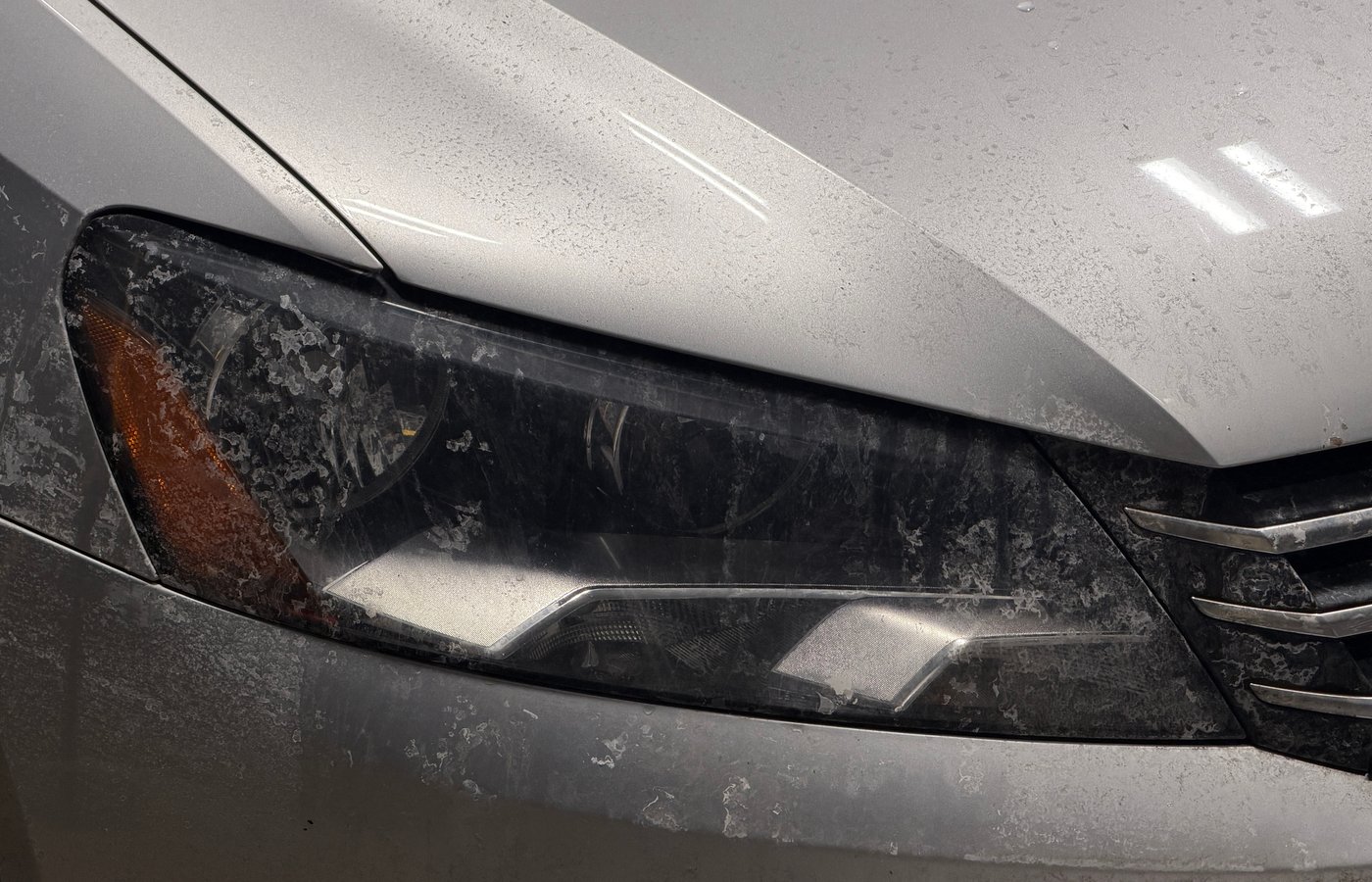
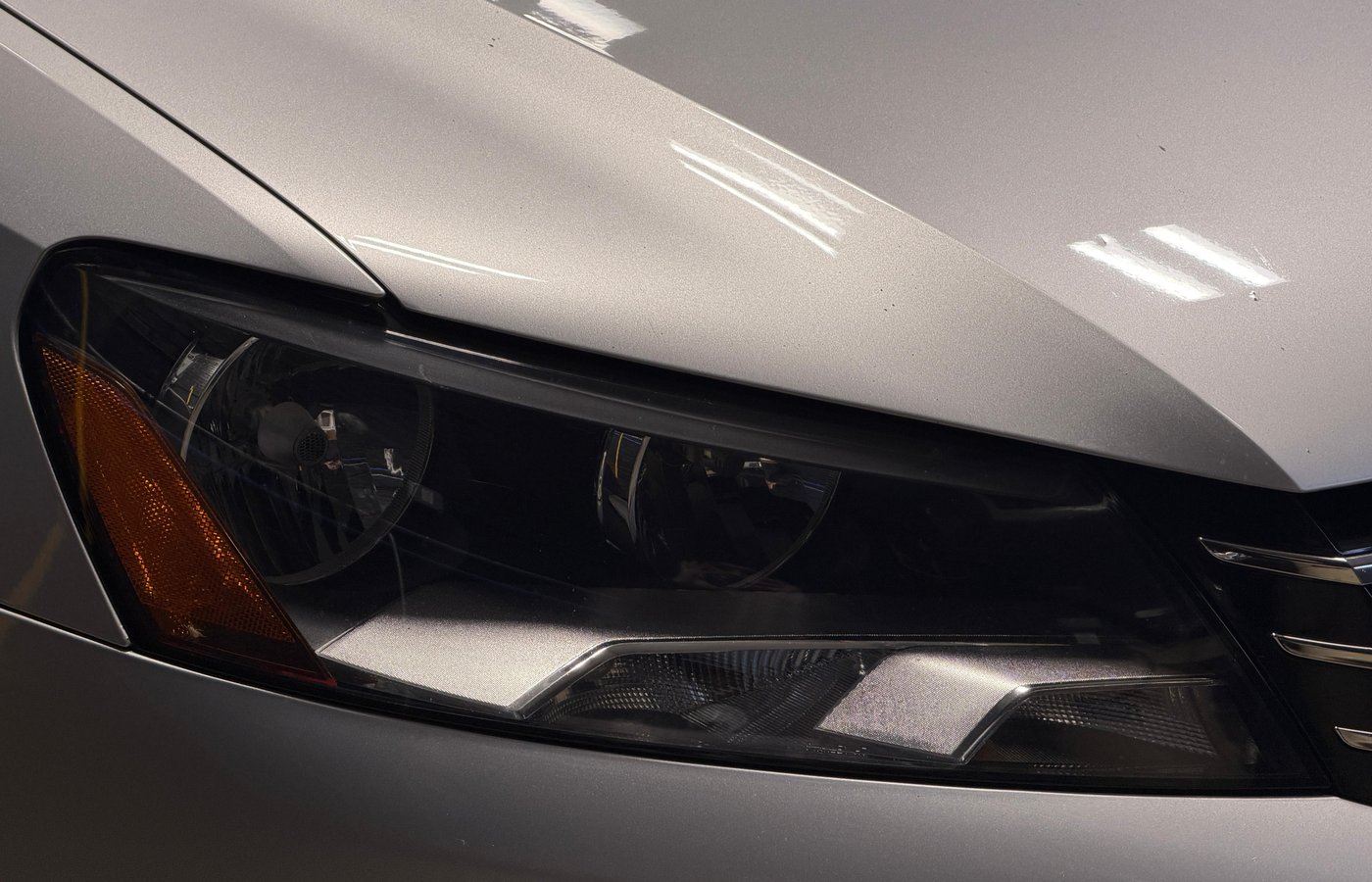
See our detailed process
Sanding
Detailing Wizards wet sands the outer layer of plastic away. Once oxidation is removed, we refine the surface using 3M Trizact foam sanding discs in a progressive grit sequence. I choose 3M Trizact foam sanding discs in a progressive grit sequence because they provide a level of control, consistency, and optical clarity that regular sanding discs simply can't match. Trizact uses a uniform, micron graded abrasive structure that cuts evenly and predictably, while the foam backing conforms to the curves of headlight lenses and reduces pressure on edges, preventing deep, uneven scratches. I start with 1000 grit only where oxidation runs deep, carefully removing just the damaged material and nothing more. The 1500 grit then averages the surface, removing the 1000-grit marks and creating a uniform scratch profile across the lens. The 3000 grit step is critical for optical clarity, reducing scratches to a micron level so light passes cleanly through the plastic instead of scattering and causing haze. This process reduces sanding time, minimizes heat buildup in the polycarbonate, improves polishability, and creates a surface that allows sealants to bond more effectively, resulting in a clearer finish and a longer-lasting headlight restoration than traditional sanding methods.
- 1000 grit – Some of the oxidation runs deep, and this level is done carefully to reach only exactly how deep is absolutely required
- 1500 grit – This level averages the depth across the surface more and removes sanding marks from 1000-grit and smooths the surface
- 3000 grit – This level is crucial to ensure that light is not being scattered across the surface of the plastic, leaving a hazy finish, or building heat.
While sanding, we use an extra layer of tape to protect the paint from any slight nicks. If using a single layer of tape, there is more opportunity to sand through the tape and damage the clearcoat or paint. For the sake of taking absolutely no risks, we use the extra layer to eliminate the possibility of accidental damage.
Sanding must be performed very carefully to ensure that light output is being restored back to its original output and clarity. Once something is sanded, it cannot be unsanded, so Detailing Wizards pays very close attention to assuring the layer is perfectly even and not discolored.
We use both 3-inch discs for primary surfaces. Then we use 1-inch discs for edges, corners, and tight convexed contours. This step is highly critical since uneven sanding or even a lack of proper grit can easily cause even worse light output.
Polishing (super super fine sanding)
After hand-sanding, we further restore clarity within the headlight surface by using a professional compound and polish applied with a machine polisher. There are three options for a polisher: a dual action polisher, rotary polisher, and Detailing Wizard's preferred flex forced rotation polisher.
A dual action polisher combines orbital vibration with spinning. This movement is dependent on pressure and will stop if you push too hard. This is good for beginners, but it's slower and less powerful. This results in greater difficulty in removing heavy oxidation and deep defects in polycarbonate.
A rotary polisher will result in more consistent cutting, but will build up more heat due to using only a rotating motion.
A flex forced rotation polisher uses the same motions as the dual action polisher, but uses a gear to ensure constant power delivery to the rotational movement as well as the ability to pivot its head and apply pressure evenly no matter what angle the polisher is being used from. This results in even pressure and rotational speed across an entire surface. This becomes more appealing when evenly applied precision is required. For high-quality detailing and finishing, Detailing Wizards uses a Maxshine 1 inch rotary polisher for edges and corners that prove difficult for the 3 inch flex forced rotation polisher to reach. This ensures:
- Uniform correction regardless of stain level or size of headlight's surface, edges, and contours
- Proper even removal of sanding marks, haze, and discoloration
- Maximum clarity and light output through a smooth surface, refined edges, and equality polished corners
Dual action polishers simply do not deliver the same level of controlled correction required for Detailing Wizards's expectations of quality.
The headlight is already starting to look a lot more clear at this point, but if it stops here, the headlight is still unprotected and not quite at its maximum light output yet.
Protection (headlight coating)
To prevent rapid re-oxidation, we apply a dedicated headlight coating specifically designed for polycarbonate lenses. This ensures:
- Protects against UV, oxidation, rain, snow, and road chemicals
- Preserves clarity and concentration of the light's beam
- Delivers up to 3 years of protection when properly maintained
The coating we use is a 2-part polycarbonate coating specifically designed to work with the headlights surface by filling in any slight roughness that is still left over and allowing the light to pierce through without refracting across the surface or beneath the coating itself. The UV protective coating is extremely strong and scratch resistant and adds a healthy layer back onto the existing headlight plastic. The layer applies as a mixture that cures into place much like how an epoxy does.
Importantly, we don't use waxes, temp seals, or spray solutions due to their more limited protection and shorter lifespan. Though, no headlight restoration is permanent because headlights are made from polycarbonate plastic, which naturally degrades when it's exposed to the environment. From the factory, headlights have a thin UV-protective coating that shields the plastic from sunlight. When oxidation forms and the lens turns yellow or cloudy, that factory UV layer is already failing. During a proper restoration, the damaged and oxidized plastic along with whatever remains of that original UV coating must be removed to get the lens clear again.
Once that protection is gone, the bare polycarbonate is exposed to UV radiation, heat, moisture, road chemicals, and environmental fallout. Sunlight breaks down the plastic at a molecular level, moisture and temperature swings accelerate the process, and contaminants embed themselves into the surface. Even with polishing, the plastic itself is still vulnerable, which is why oxidation will eventually return.
Sealants and coatings dramatically slow this process, but they do not recreate the original factory coating. Over time, UV protection wears down, especially on a surface that sits at the very front of the vehicle and takes constant abuse. That's why maintenance or reapplication is necessary. Without ongoing protection, headlights will always re-oxidize.
In short, restorations that don't last forever aren't being done wrong, but plastic exposed to the elements simply will always age. To properly maintain headlights, restorations will need to be performed over time, but in doing so, the total age of a headlight's light output and performance will be prolonged significantly. Detailing Wizards is offering this transparency because we believe it's important that customers are aware of the current limitations of headlight restorations, but can also rest assured that we provide the absolute highest-end service ensuring your headlights will last in their best shape for the longest time possible.
Book Now to Reserve Your Slot.
